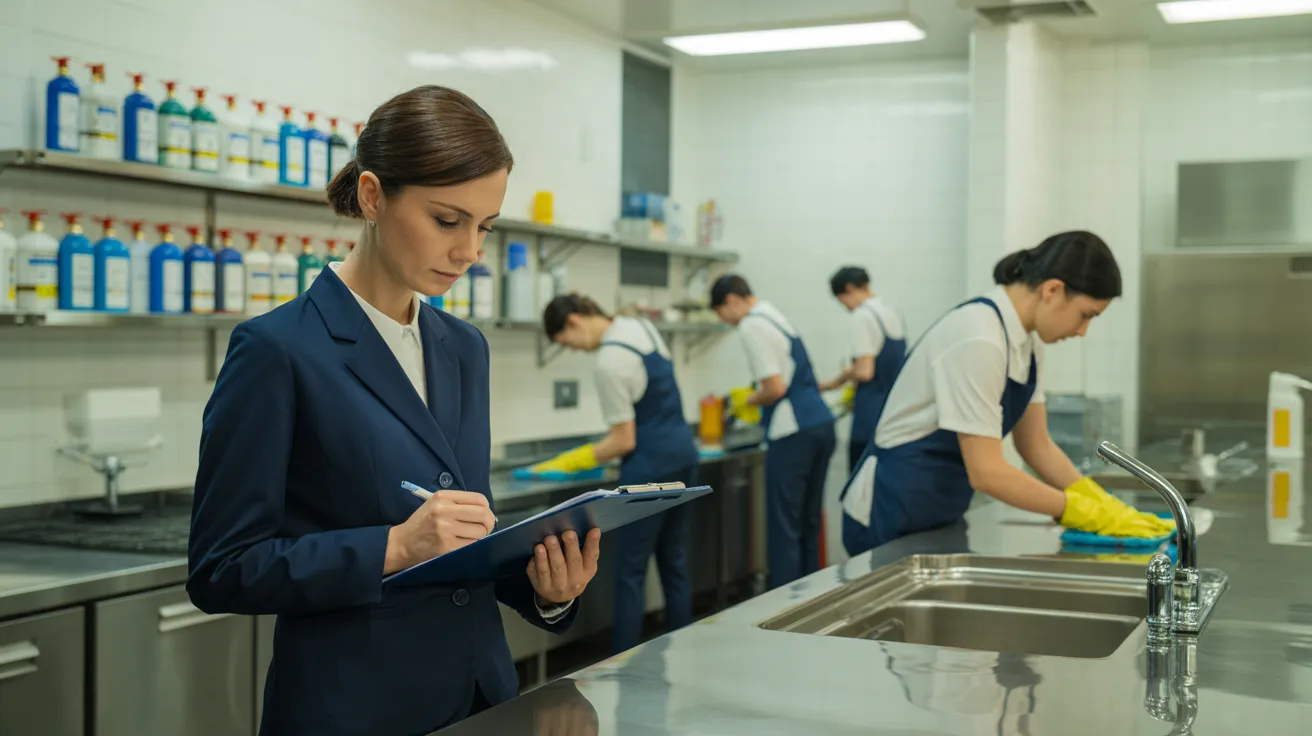
Professional food safety experts located in Brampton help maintain food service establishments, food distribution facilities, baking enterprises, warehouses, and food service vehicles in compliance. They disinfect high-touch surfaces, food prep surfaces, equipment, floors, drains, restrooms, and preparation zones with certified chemicals, in correct dilution, and using documented contact periods.
Main Points
- Brampton food safety cleaning experts service restaurants, grocery departments, commissaries, warehouses, bakeries, schools, mobile vendors, and allergen-sensitive operations.
- Sectional methods sanitize high-touch surfaces, food-contact equipment, kitchens, floors, drains, restrooms, and storage areas for eliminating cross-contamination.
- Verification of proper chemical concentration, compatibility, and contact time is completed by qualified providers, with finishing documented using swabs, reviews, and action records.
- Risk, production rate, changeovers, accidents, and regulations should guide hygiene schedules, with regular, regular, and seasonal duties allocated by area.
- Protection, color-coded implements, HACCP, public-health competency, WHMIS preparation, endorsements, and assessment-ready sanitation records are important supplier attributes.
Brampton Operations That Need Food Safety Cleaning: Which Ones?
Food safety cleaning is necessary for any Brampton facility that processes, stores, prepares, packages, or serves food. Apply it to your business if it is subject to public health review, food regulations, or HACCP protocols. This includes dining establishments, break rooms, distribution centers, market departments, meat shops, fish areas, stores, and food prep kitchens.
Compliant food safety cleaning remains essential in supply warehouses, processing plants, freezer locations, commercial bakeries, school food programs, reception facilities, and food delivery centers. Temporary mobile establishments are included, including catering vehicles, festival vendors, and pop-up establishments. Your location needs recorded sanitation procedures if your employees process ingredients, portion ready-to-eat items, reheat products, or store allergens. In Brampton, hygiene is not discretionary; it forms part of statutory, functional, and public health adherence.
What Services Do Brampton Cleaning Experts Provide?
Your operation needs cleaning professionals who disinfect frequently contacted surfaces, kitchens, floors, and restrooms for food safety and health code adherence. These specific areas are emphasized due to their elevated cross-contamination potential, trip and slip dangers, and breaches of sanitation codes.
Understanding their cleaning procedures allows you to confirm your operation's sanitation satisfies required standards and regulations.
Sanitizing High-Touch Zones
implement a sterilization protocol
swabbing methods to confirm cleaning results
Kitchen Areas, Floor Surfaces, and Bathroom Spaces
Brampton cleaning services focus on kitchens, floors, and restrooms as each zone presents different sanitation, slip-and-fall, and wellness concerns. In industrial kitchens, you need degreasing on cook lines, equipment exteriors, drains, prep surfaces, and splash zones to reduce contamination and pest pressure.
Documented floor care is also provided as part of the service.
For restroom sanitation, cleaners disinfect high-touch surfaces, bathroom fixtures, stall dividers, supply dispensers, and trash receptacles, then replace products and reduce odor. They also service restaurant moprooms, where chemical storage, sink hygiene, and drainage conditions can affect sanitation compliance and staff safety daily.
The Importance of Food Safety Cleaning in Brampton
To adhere to health code requirements and succeed in audits, Brampton facilities must follow food-safe cleaning standards. You also minimize cross-contamination by cleaning and sanitizing food-contact surfaces, equipment, and high-touch areas correctly. Most importantly, you help protect community wellness by reducing the chance of food poisoning in your establishment.
Health Code Compliance
Food operations in Brampton face strict public health standards, making food safety cleaning crucial to adhering to health code requirements, defending patrons, and sidestepping enforcement action. You must maintain sanitized food contact points, recorded sanitation plans, appropriate product handling, and verifiable staff procedures that correspond to municipal and provincial inspection expectations.
Preserving comprehensive sanitation documentation shows due diligence for official assessments and establishes that your procedures are uniform, reproducible, and tracked.
Cross-Contamination Prevention
Adhering to regulatory guidelines requires your expertise in stopping cross-contamination throughout routine preparation and sanitation work. You need to separate raw ingredients from ready-to-eat foods, sanitize work stations after each task, and keep chemicals away from food-contact items. Structured procedures reduce transfer risks and ensure consistent compliance during inspections.
You could implement allergen segregation to stop main allergens from reaching shared surfaces, containers, or equipment. Apply separate boards, color-marked equipment, and rigorous tool identification so staff don't mix items during preparation or service. Mandate handwashing after handling uncooked meat, fish, egg products, or allergens. Change wiping cloths regularly, and test disinfectant concentration using strips. When you train staff to follow these controls every shift, you develop a more sanitary, secure business that meets Brampton's food safety expectations daily.
Public Health Defense
When food safety cleaning breaks down, you don't just face inspection failure—you visit this page heighten the likelihood of foodborne illness affecting customers, staff, and the wider Brampton community. You also undermine your responsibility in protecting public health, especially in high-traffic food premises where pathogens travel quickly through surfaces, equipment, and touchpoints.
You depend on cleaning procedures that eliminate contaminants, effectively sanitize, and verify results. This entails adhering to exposure times, deploying approved disinfectants, maintaining records, and coaching staff to fulfill health-unit expectations. These actions support pathogen control by suppressing pathogens before contaminating food or hands. In Brampton, robust sanitation shields vulnerable populations, curtails outbreak likelihood, and proves your diligence. When you maintain standards, you exceed requirements—you substantially reduce risk and advance safer food handling throughout the city.
How Does Cleaning Support Food Safety Compliance?
Maintaining strict sanitation practices strengthens food safety compliance by lowering contamination exposure, controlling pathogen growth, and keeping your facility in accordance with sanitation requirements under HACCP-based programs and public health regulations. You validate that product-contact areas remain visibly clean and microbiologically controlled, supporting documented preventive controls and inspection readiness.
Conscientious cleaning additionally reinforces allergen mitigation by removing residues that can trigger undeclared allergen exposure. When you combine validated sanitation procedures with safety training, your staff can follow consistent approaches, employ approved chemicals appropriately, fill out documentation thoroughly, and respond to irregularities ahead of they escalate. Consistent cleaning enables audit trails, establishes remediation efforts, and exhibits responsibility during audits. It also helps you preserve product safety, sustain operational compliance, and minimize the likelihood of punitive measures, recalls, complaints, and avoidable safety threats.
What's the Right Time to Plan Commercial Cleaning?
Cleaning schedules are most effective when you create them according to risk levels, output volume, and compliance needs rather than using only a fixed calendar alone.
handled independently
Selecting the Right Brampton Cleaning Experts: Key Considerations
Begin by evaluating providers based on food-safe sanitation requirements—not solely on budget. You should confirm that each organization comprehends CFIA, public health, and HACCP-aligned expectations applicable to your facility. Request proof of insurance, WHMIS compliance, staff training documentation, and oversight procedures. Assess whether technicians recognize cross-contamination hazards, chemical handling protocols, and verifiable sanitation records.
Additionally, you need to evaluate operational reliability and accountability. Obtain references from Brampton food operations, then review service speed, corrective measures, and communication practices. Verify the company conducts supplier reviews and can deliver inspection-ready documentation when inspectors or external parties need proof. Verify equipment upkeep, color-coded equipment are applied correctly, and site-specific hazards are identified. A capable service ensures compliance, product quality, and your reputation.
What details should a sanitation plan contain?
Create a documented strategy that clearly outlines every sanitation duty, guideline, and expectation before production starts. You should document cleaning frequencies, approved chemicals, dilution rates, contact times, tools, and verification methods for each zone, surface, and piece of equipment. Don't forget to add pre-operational inspections, corrective actions, and employee training requirements.
Your strategy should also address contamination prevention controls, waste handling procedures, pest management measures, and written schedules for restrooms, drains, floors, and food-contact areas. Detail how you'll keep raw and ready-to-eat processes separate, facilitate ingredient tracking, and ensure accurate allergen labeling through validated cleaning between product changes. You should set accountability, maintain signed records, and assess results against regulatory standards, HACCP controls, and customer requirements. When gaps appear, update procedures immediately and retrain staff.
Regular Asked Inquiries
Are cleaning services available for nighttime operations in Brampton properties?
Yes, you can arrange cleaning services to support overnight shifts in Brampton facilities. You'll organize overnight sanitation around production schedules, access requirements, and staffing levels. Providers generally create nighttime procedures to reduce interruption, stay compliant, and track completed work. You should verify response times, management, access procedures, and disposal procedures before starting service.
Are hazard containment services provided from sanitation professionals?
Yes, you can find Brampton sanitation professionals to provide emergency spill response services. They manage hazardous materials, evaluate dangers, contain contamination, and start rapid decontamination to reduce exposure and operational disruption. You should confirm their response times, training certifications, safety procedures, and disposal procedures. If your facility must meet health or food safety regulations, select a service that documents incidents, maintains regulatory procedures, and enables compliance verification.
Will environmentally safe disinfectants clean safely food preparation areas?
Absolutely, eco-friendly disinfectants are secure for surfaces contacting food when you select items marked food-safe and regulatory compliant. You must verify exposure duration, mixing proportions, and rinse procedures before use. Plant based formulas minimize toxic chemical contact, though you must obtain proof of efficacy against specific pathogens. For maintaining residue free surfaces, follow manufacturer directions precisely and confirm your cleaning agent complies with food industry regulations.
Can cleaning schedules adapt with production fluctuations?
Yes, you can modify cleaning schedules for seasonal production changes. You should modify intervals, labor allocation, cleaning agents, and verification steps to fit seasonal workflows while preserving regulatory adherence. You'll minimize operational delays by scheduling sanitization around changeovers, peak seasons, and operational patterns. You should additionally revise standard operating procedures, staff education, and facility monitoring to capture seasonal hazards, new allergens, or increased soiling. Periodic assessments preserve your program effective.
Will commercial cleaners teach employees on hygiene best practices?
Absolutely, commercial cleaners regularly deliver employee education on sanitation best practices. Your staff receives instruction on proper chemical use, contact times, contamination avoidance, machine takedown, and documentation. They generally match instruction with HACCP, GMP, and CFIA or regional health authority requirements. Many also perform health inspections to verify compliance, identify gaps, and strengthen corrective measures. This enables you to sustain consistent procedures, clear audits, and reduce food safety risks routinely.
Summary
Through working with Brampton commercial cleaning and food safety specialists, you do far more than tidy—you keep your operation prepared for audits and your standards meet requirements. From kitchen spaces to processing areas, all maintained surfaces and kept corners help prevent pest problems and prevent significant costs. Through booking service at proper intervals and sticking to a solid cleaning plan, you safeguard employees, clients, and your standing. Within strict regulatory frameworks, proper sanitation must be a priority—they are fundamental to success.